It's the context, not the people

Even the smartest people work below their capacity in
workplaces with the wrong kind of tension.
At Leaders for Good, we show you how to transform friction into flow to unlock your team's brilliance with outcomes that last.

No burnout required.

Most workplace problems are blamed on people. Someone lacked skill or motivation; a team failed to didn't try hard enough. The truth is simpler: People adapt to their environments, so behavior is a response and context is the driver.

So when leaders want better outcomes, they can acknoweldge the inherited workplaces and redesign the conditions producing unwanted behaviors and outcomes.

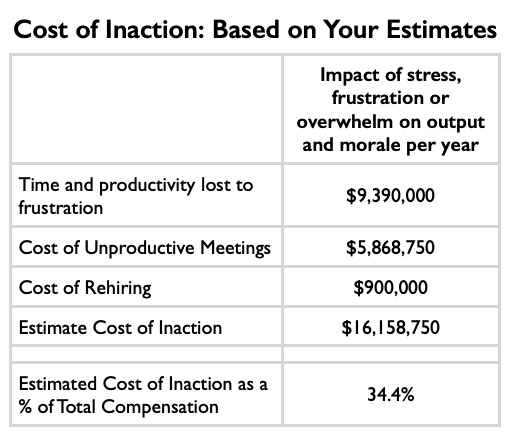
Many leaders delay acting, hoping things will improve. That waiting seems harmless, but it isn't. It quickly becomes expensive.

Here's a simple way to see what postponing action
is costing you:

Cost of Inaction

The wrong work context creates value leaks.

What's a value leak?

A value leak is human capacity that gets diverted from the work because the environment works against the people doing it.

Human capacity includes our energy, attention, intelligence, creativity, judgment and care. We use our capacity to think, create, relate, solve problems and accomplish our meaningful goals.

When workplaces are designed primarily for predictability and control, much of that capacity gets diverted into self-preservation
as we protect our status and jobs from threats. On top of that, we have to navigate chronic stress, frustration, unproductive meetings, rework, turnover and other issues.

Across an entire team, the cost becomes enormous.

Calculate Your Cost

Workplaces We Inherited

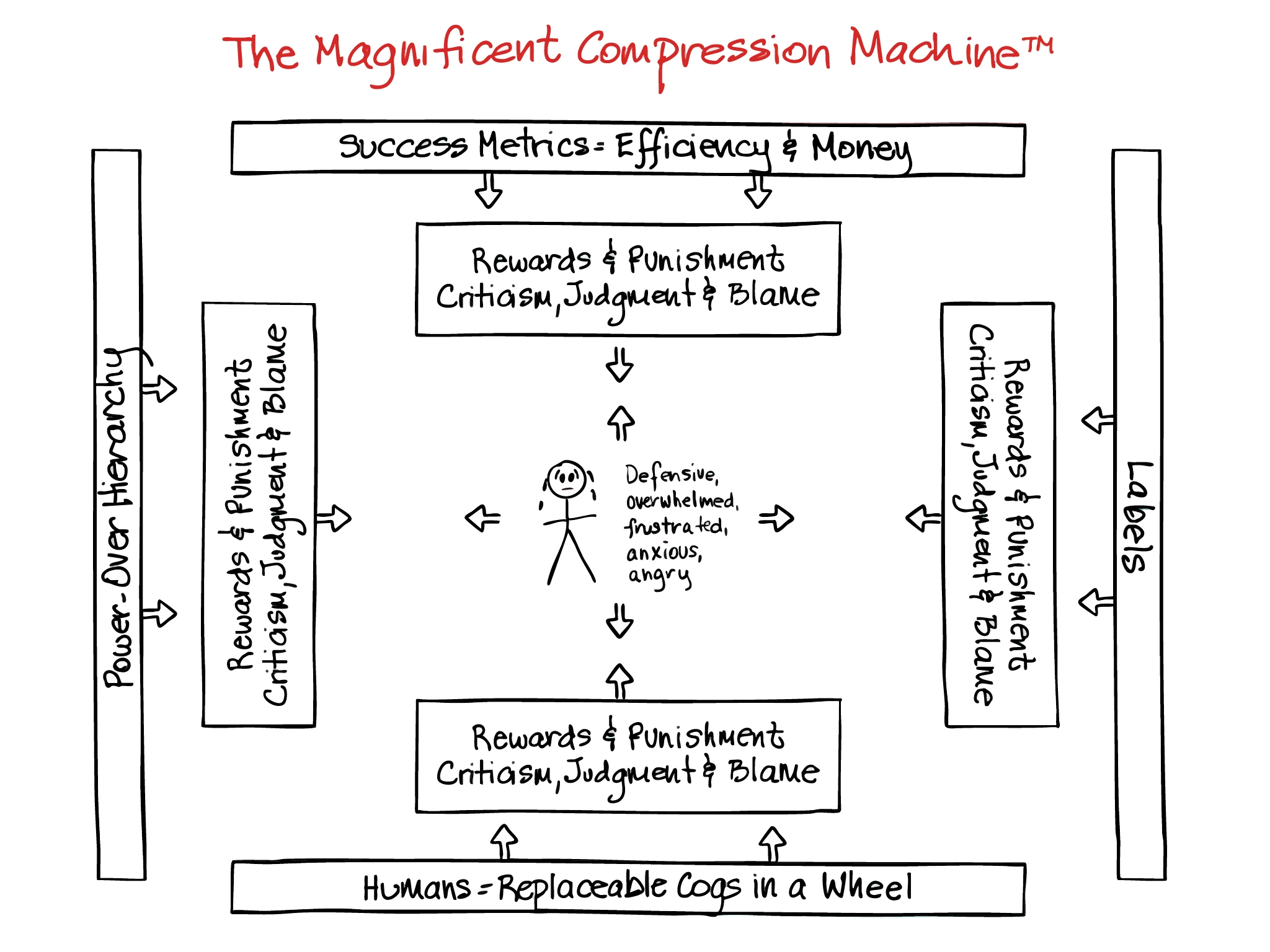
The unwanted friction we experience at work isn't random. It comes from mindsets and workplace structures we've inherited, which we call The Magnificent Compression Machine.

Designed to maximize predictability, control, and output, it generates five drivers of unwanted friction, illustrated in the image on the right.

Within this structure, we humans are treated as costs, inputs, workers, resources or replaceable cogs in a wheel.

This activates our self-preservation instinct and we then focus on protecting our status and jobs, reducing the capacity we have for mission-related work. We're then drained by chronic stress, uncertainty, tension, conflict, hierarchical roadblocks, and limited authority. When things go wrong, we’re blamed. The result: we work in survival mode.

From Friction to Flow

There’s a different kind of structure that reliably produces thriving and flow. We call it The Magnificent Inspiration Society.

Instead of treating people as replaceable cogs, it sees us as
whole humans who are inherently creative and resilient – and
capable of far more than our inherited workplaces allow.

It generates five drivers of thriving and flow, illustrated in the
image on the right.

These conditions engage us and free us to access our highest capabilities, even amid uncertainty and what feels like chaos.

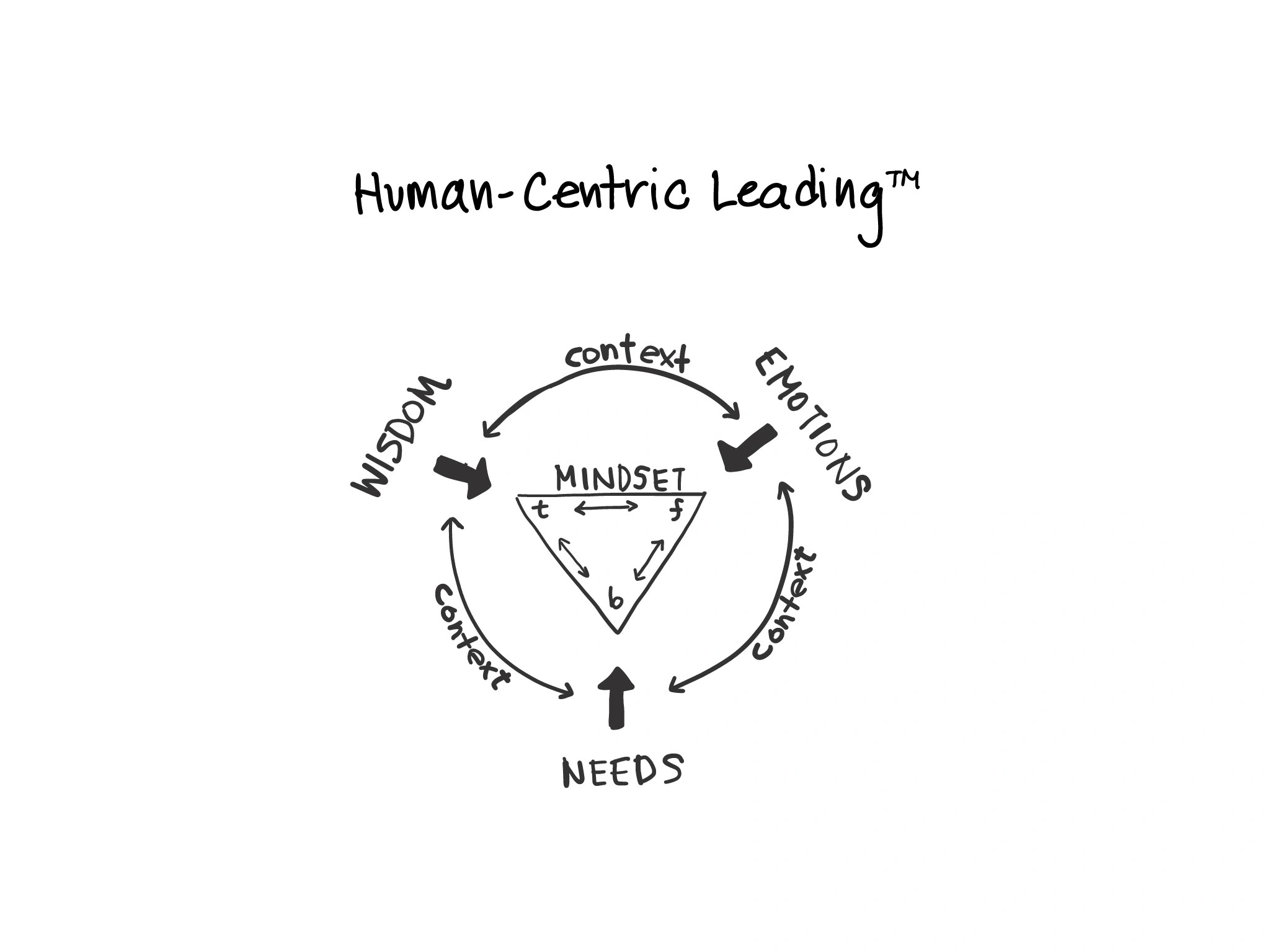
Human-Centric Leading

But how do we unlearn inherited mindsets and workplace practices when we’re still working within them?

Human-Centric Leading provides a mindset and practical set of
tools for doing just that. It helps leaders shift unwanted behaviors
and outcomes into desired ones that benefit everyone involved.

With it, leaders and teams can see what’s driving recurring friction, change what keeps producing it, and create more of the behaviors and outcomes they want.

Human-Centric Leading Overview Toolkit

Want Speed and Guidance?

Friction to Flow in Workplaces Program

You can begin transforming workplace friction into flow on your own, using the Magnificent Compression Machine and Magnificent Inspiration Society as guides. Please do!

Yet even the most seasoned leaders face challenges changing a culture while working within it.

If you want to move quickly and effectively, avoid pitfalls, and have expert guidance through the transformation, you can choose to join the
Friction to Flow in Workplaces Program.

It’s a coaching program for visionary and creative leaders who want to transform their team culture toward flow while engaging key allies and the team in the change. Together, you and the team learn to recognize how your workplace is shaping you. You then reshape your mindsets and ways of working to improve how you feel at work and raise the bar on what
you can accomplish together.

A 150-page graphic manual guides the transformation step by step while leaving room
to adapt the process to your team and situation.

Organizations We've Worked WIth

Our work has evolved over decades of working with leaders and teams
across organizations and sectors